
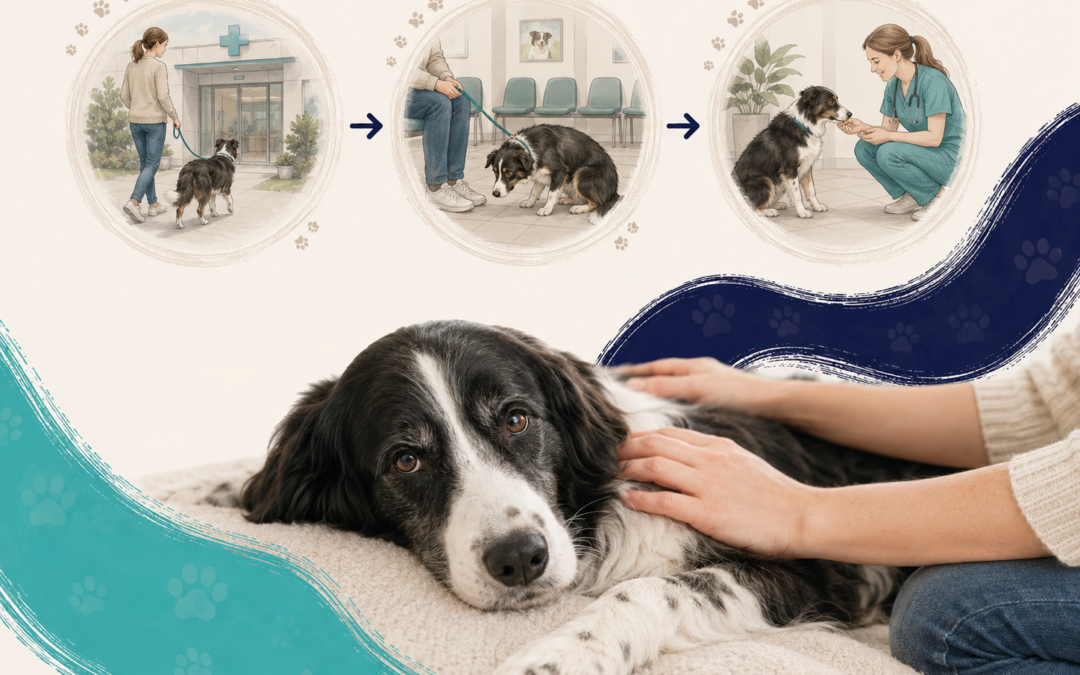
Before discussing ways to help your dog cope with veterinary visits, it is worth taking an honest look at the bigger picture.
- Does your dog generally look to you for guidance when faced with something unfamiliar?
- Can your dog recover calmly from mild stress or frustration?
- Do they cope well with everyday challenges, or do they struggle with things such as excessive excitement, separation issues, attention-seeking behaviours, reactivity, poor impulse control, or difficulty settling?
Veterinary anxiety is often more complex than simply disliking the veterinary practice itself.
For some dogs, the veterinary environment may highlight difficulties with confidence, coping skills, or previous learning experiences that are less noticeable in everyday life.
However, it is equally important to recognise that even confident, well-trained dogs can find veterinary visits stressful.
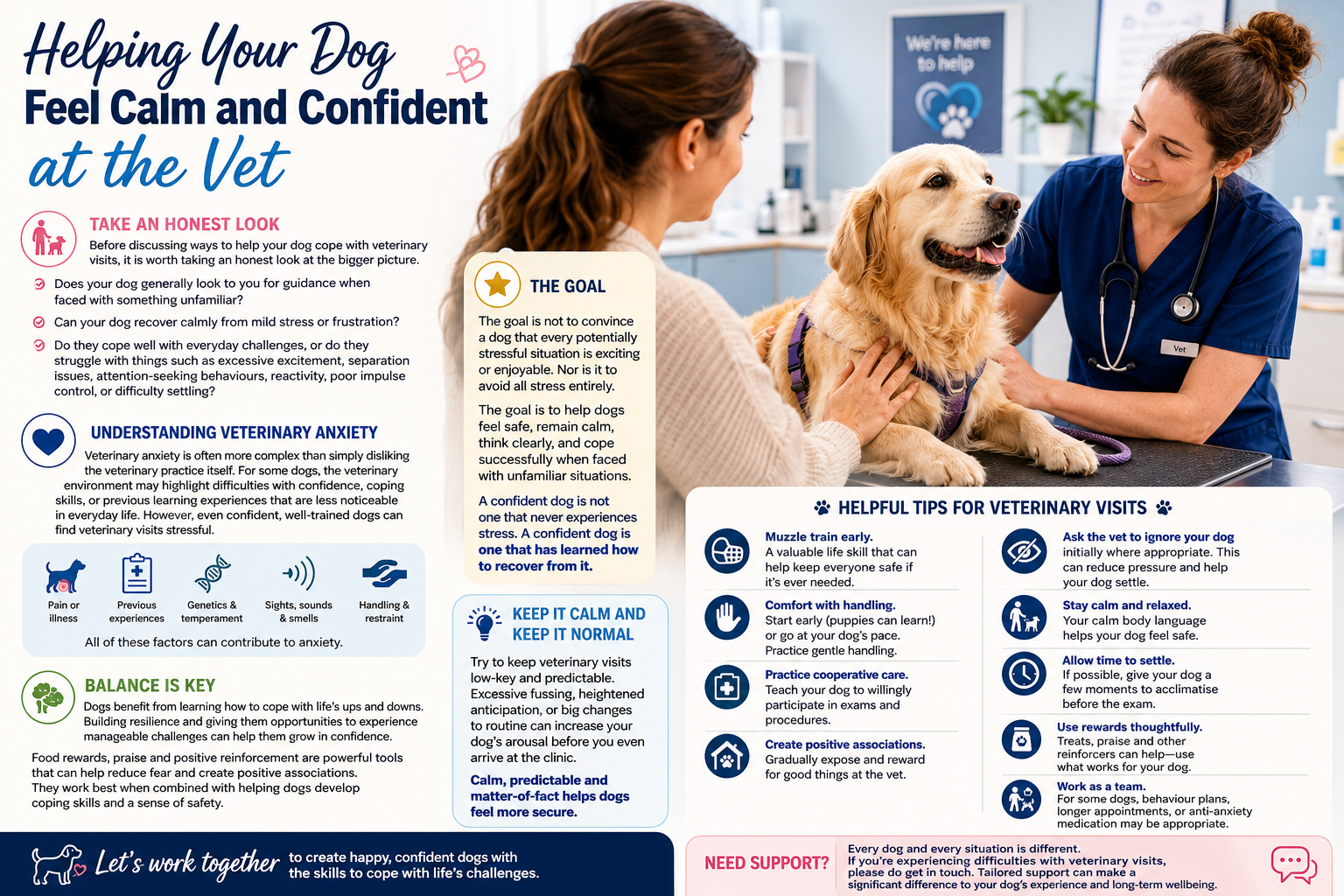
Pain, illness, previous negative experiences, genetics, temperament, unfamiliar handling, restraint, and the sights, sounds, and smells of a veterinary clinic can all contribute to anxiety.
Many owners understandably want to protect their dogs from discomfort or uncertainty. While this comes from a place of care, dogs also benefit from opportunities to develop resilience and coping skills.
Experiencing manageable levels of challenge and learning how to recover from them can help build confidence over time.
Likewise, food rewards and positive reinforcement can be valuable tools when used appropriately. Creating positive associations with handling, equipment, and veterinary environments is supported by a large body of behavioural research and can significantly reduce stress for many dogs. However, treats alone are not always enough. If we focus solely on distracting a dog from their worries, we may miss opportunities to help them develop broader coping skills and confidence.
The goal is not to convince a dog that every potentially stressful situation is exciting or enjoyable. Nor is it to avoid all stress entirely. The goal is to help dogs feel safe, remain calm, think clearly, and cope successfully when faced with unfamiliar situations. Building resilience and creating positive associations are not opposing approaches—they work best together.
Another common mistake is unintentionally turning a routine veterinary visit into a major event. Excessive fussing, heightened anticipation, constant reassurance, or significant changes to normal routines can sometimes increase a dog's emotional arousal before they even arrive at the practice. In many cases, remaining calm, predictable, and matter-of-fact can help dogs feel more secure.
A confident dog is not one that never experiences stress. A confident dog is one that has learned how to recover from it.
Helpful tips for veterinary visits:
- Condition your dog to wearing a muzzle well before any veterinary appointment. While not every dog will need one, muzzle training is a valuable life skill and helps ensure the safety of both veterinary staff and your dog if it ever becomes necessary.
- Ensure your dog is comfortable being handled and examined. Gentle, positive handling exercises should begin in puppyhood where possible, but older dogs can learn these skills too.
- Practise cooperative care exercises at home, teaching your dog to willingly participate in handling and examinations rather than simply tolerating them.
- Create positive associations with veterinary equipment, handling procedures, scales, examination tables, and clinic environments through gradual exposure and reward-based training.
- Ask your veterinary team to initially ignore your dog where appropriate. This can reduce social pressure and allow your dog time to assess the environment.
- Remain calm and relaxed yourself, and avoid creating tension on the lead.
- If possible, allow your dog a few moments to acclimatise to the surroundings before the examination begins.
- Use food rewards, praise, or other reinforcers thoughtfully if they help your dog feel more comfortable, but avoid inadvertently increasing arousal or overwhelming them.
Let's work together to create happy, confident dogs with the skills to cope with life's challenges. Every dog is an individual, and there is no one-size-fits-all solution.
Understanding the reasons behind your dog's behaviour and developing a tailored plan can make veterinary visits less stressful and improve their long-term wellbeing.
If you are experiencing difficulties with veterinary visits, please do get in touch.
Every dog and every situation is different, which is why generic advice is not always appropriate. Tailored support can help identify the underlying causes of your dog's anxiety and provide practical strategies to improve their confidence and experience. (Please do download the picture below as a reminder for you!)
Ready to Build a Better Relationship with Your Dog?
Discover how my expertise can transform your dog's behaviour and your bond.