
When we think about exercising our dogs, we often picture long walks, games of fetch, or agility training. While physical exercise is important for keeping our dogs fit and healthy, it is only one part of the equation.
Dogs also need opportunities to use their minds, solve problems, and express their natural instincts. One of the most enriching activities you can offer your canine companion is scent work. Designed to tap into a dog's incredible sense of smell, scent work provides both mental and physical stimulation while building confidence and strengthening the bond between dog and owner.
Dogs experience the world primarily through their noses. While humans rely heavily on vision, dogs gather an enormous amount of information through scent. In fact, a dog's sense of smell is estimated to be tens of thousands of times more sensitive than ours, allowing them to detect odours we can't even imagine. Every walk becomes a newspaper of information, revealing which animals have passed by, where they have been, and even clues about their emotional state.
Scent work encourages dogs to use this remarkable natural ability by searching for hidden treats, toys, or specific target odours in a fun, structured, and rewarding way.
One of the greatest benefits of scent work is mental enrichment. Just 15 to 20 minutes of focused searching can be as tiring as a much longer walk because it requires concentration, problem-solving, decision-making, and sustained focus. As dogs work through a search area, they are constantly making choices, following scent trails, eliminating distractions, and adjusting their search patterns. This mental workout leaves many dogs feeling calm, satisfied, and fulfilled.
For busy owners, scent work can be a lifesaver. There will inevitably be days when the weather is poor, work commitments get in the way, or your dog simply can't manage a long walk due to age or injury. Rather than feeling guilty about missing physical exercise, a short scent work session indoors or in the garden can provide meaningful stimulation that helps meet your dog's behavioural needs. Many owners are surprised by just how relaxed their dogs become after only a few successful searches.
Scent work is also fantastic for building confidence. Nervous or anxious dogs often thrive when given opportunities to solve problems independently. Unlike obedience training, where dogs are often looking to their handler for direction, scent work encourages them to trust their own instincts. Successfully finding a hidden scent rewards their efforts and reinforces independent thinking. Every successful search gives the dog another small achievement, gradually building resilience and confidence over time.
This can be particularly valuable for rescue dogs, puppies experiencing new environments, or dogs that lack confidence around unfamiliar situations. Because there is no pressure to perform perfectly, dogs learn at their own pace. As their confidence grows during searches, many owners notice positive changes in other areas of life, including improved confidence on walks, around visitors, and when encountering new places.
Another major advantage is that scent work is suitable for almost every dog. Whether you have a young puppy, an energetic adolescent, a senior dog, or a breed that isn't suited to high-impact exercise, scent work can be adapted to suit their age, fitness level, and ability. Unlike some dog sports, searches can be designed with very little physical strain, making them accessible for dogs recovering from injury, managing arthritis, or living with joint issues.
Puppies can begin with simple games that encourage curiosity and problem-solving, helping to develop confidence and focus from an early age. Adult dogs benefit from increasingly challenging searches that keep their minds engaged, while senior dogs often continue enjoying scent work long after they have slowed down physically. The flexibility of the activity means every dog can work at their own level and progress at a pace that suits them.
For energetic dogs, scent work provides a healthy outlet for natural instincts. Many behavioural challenges, including excessive barking, digging, scavenging, or destructive chewing, stem from boredom and unmet behavioural needs rather than deliberate disobedience. Dogs have evolved to use their noses for survival, and giving them a constructive opportunity to do so satisfies a deeply ingrained instinct.
Rather than trying to suppress natural behaviours, scent work channels them into something productive and enjoyable. Owners often find that dogs who regularly participate in scent work are calmer around the home, settle more easily after training sessions, and display fewer frustration-related behaviours because they have had an appropriate outlet for their energy.
Scent work also strengthens the relationship between dogs and their owners. Training together encourages communication, patience, and teamwork without relying on constant commands. While your dog searches independently, your role becomes that of a supportive handler, learning to trust your dog's nose and carefully observe their body language.
As you spend time watching your dog's changes in posture, breathing, tail carriage, and movement, you'll begin to recognise when they are in odour, when they lose the scent, and when they have located the source. This deeper understanding creates a stronger partnership built on mutual trust. Watching your dog confidently work through a search is incredibly rewarding and often reveals abilities that owners never realised their dog possessed.
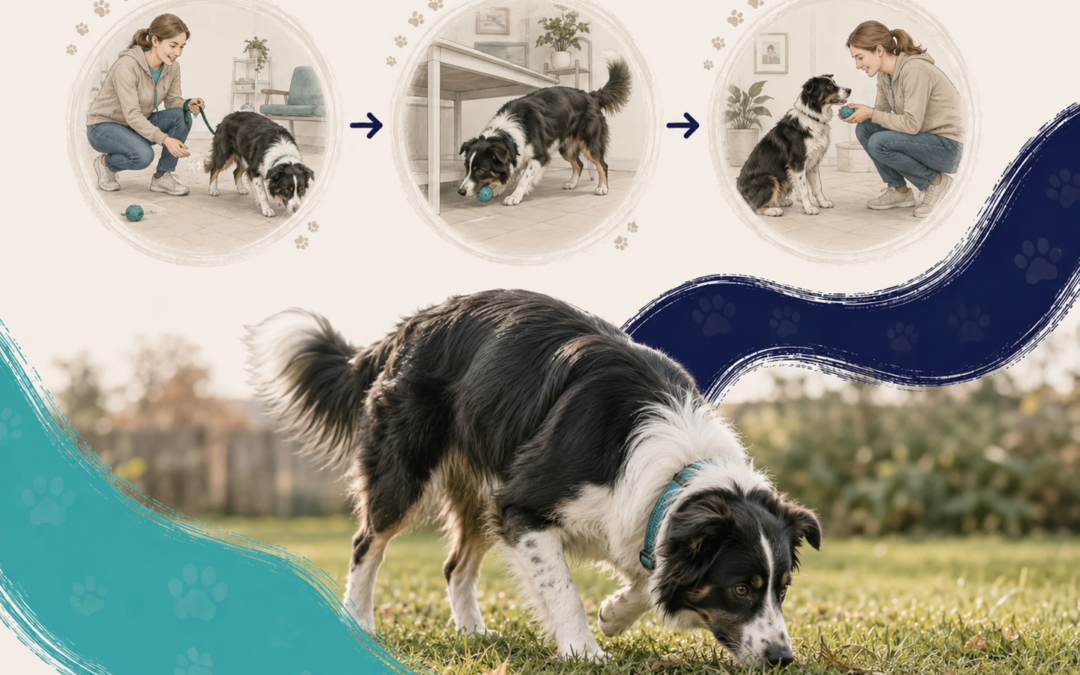
One of the reasons scent work has become so popular is its accessibility. It doesn't require expensive equipment, specialist facilities, or large amounts of space. You can begin your scent work journey by building value in a ‘clam' toy filled with treats for foodie dogs or a tennis ball for ball-motivated dogs. The goal is to create excitement around finding the chosen reward object before introducing more complex searches.
Once your dog eagerly searches for their toy, you can begin hiding it around the house or garden. Start with easy locations where success is almost guaranteed, gradually increasing the difficulty as your dog's confidence and understanding develop. The emphasis should always be on making the game enjoyable and rewarding, allowing your dog to experience regular success while gently increasing the challenge.
When your dog clearly enjoys the searching game—which usually doesn't take too long—you can begin introducing target odours. This is where structured scent detection training begins, teaching your dog to recognise and indicate a specific scent. At this stage, working with an experienced instructor can be extremely beneficial. Professional guidance helps ensure the training progresses correctly, prevents common mistakes, and allows both handler and dog to build strong, reliable search skills.
Beyond being an enjoyable hobby, scent work is also used professionally in many fields. Detection dogs assist with conservation projects, medical detection, search and rescue, customs, and law enforcement. While most pet dogs won't go on to work professionally, participating in scent work allows them to experience the same type of rewarding activity that working dogs have enjoyed for decades.
Ultimately, scent work is far more than a game—it's a way to satisfy your dog's natural instincts, improve their mental wellbeing, and create enjoyable experiences together. It provides an opportunity for dogs to think, problem-solve, and succeed while strengthening the partnership between dog and owner.
Whether you're looking to enrich your dog's daily routine, build confidence, reduce boredom-related behaviours, or simply have fun together, scent work is an activity that offers lifelong benefits for dogs of all ages and abilities. By allowing dogs to use the sense they rely on most, we give them the chance to do what they were born to do—and few things are more rewarding than watching a dog truly enjoy putting their incredible nose to work.
Ready to Build a Better Relationship with Your Dog?
Discover how my expertise can transform your dog's behaviour and your bond.