
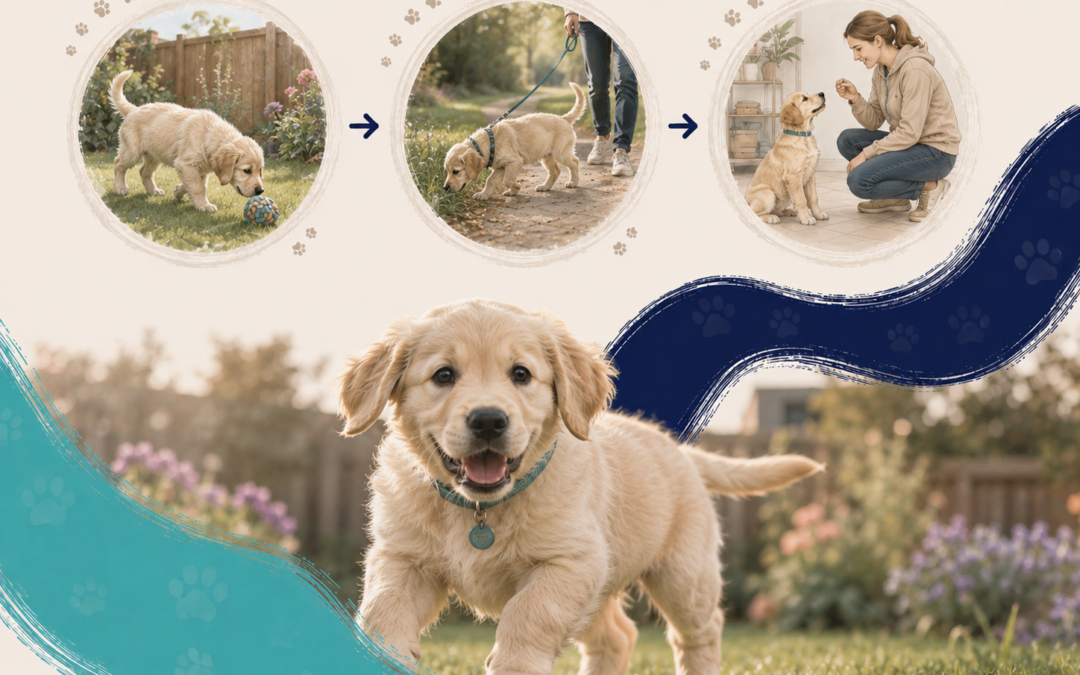
Bringing home a new puppy is an exciting time filled with cuddles, playtime, and plenty of unforgettable moments. As your puppy settles into their new home, one question that almost every owner asks is, "How much exercise does my puppy actually need?" It's an important question because while exercise is essential for healthy development, too much of the wrong type can be just as harmful as too little.
Puppies are growing rapidly during their first six months of life. Their bones, joints, muscles, and growth plates are still developing, meaning their exercise needs are very different from those of an adult dog. The aim isn't to tire them out with long walks but to provide a balance of gentle physical activity, mental stimulation, socialisation, training, and plenty of rest.
Exercise Isn't Just About Walking
When people think of exercise, they often think of taking their dog for a walk. While walks certainly have their place, they're only one part of a puppy's daily activity.
For a young puppy, exploring the garden, playing with toys, learning new skills, sniffing around different environments, and interacting with their family all count as valuable exercise. These activities encourage natural behaviours, improve confidence, and help puppies learn about the world around them.
In fact, mental stimulation can often be more tiring than physical exercise. Short training sessions, proprioceptive fun, food puzzles, scent games, and problem-solving activities help satisfy your puppy's curious mind without placing unnecessary stress on growing joints.
The First Few Weeks at Home (8–12 Weeks)
When your puppy first comes home, they'll spend much of their day sleeping. Young puppies need between 18 and 20 hours of sleep every day, with bursts of energy in between. It's perfectly normal for them to play enthusiastically for ten or fifteen minutes before suddenly falling asleep.
At this stage, formal exercise should be kept to a minimum. Most of your puppy's activity should come from free play around the home and garden, provided the environment is safe and secure.
If your puppy hasn't completed their vaccination course, avoid areas where unvaccinated dogs may have been. Instead, focus on positive experiences such as meeting visitors, hearing household noises, travelling in the car, and experiencing different surfaces like grass, gravel, carpet, and wooden flooring.
This is also the perfect time to begin simple reward-based training. Teaching your puppy their name, recall, sit, settle, and handling exercises provides valuable mental stimulation while strengthening your relationship.
Three to Four Months
By the time your puppy reaches 12 to 16 weeks, they'll be far more adventurous. Their confidence grows daily, and they begin exploring with greater enthusiasm.
Many owners have heard the guideline of "five minutes of exercise per month of age, twice a day." While this offers a rough starting point, it shouldn't be treated as a strict rule. Every puppy is different. Breed, size, temperament, and individual fitness all play a role in determining how much activity is appropriate.
Rather than watching the clock, pay attention to your puppy. A relaxed sniff around the park at their own pace is very different from marching several miles on a lead. Gentle exploration, opportunities to investigate new smells, and short periods of play are often far more beneficial than continuous walking.
It's also important to allow puppies to stop, sniff, and observe their surroundings. Constantly encouraging them to keep moving can make walks less enriching and more physically demanding.
Four to Five Months
At around four months of age, puppies often experience a surge in confidence and energy. Many owners mistake this increased enthusiasm as a sign they need significantly more exercise. In reality, they still require careful management.
This is a great age to introduce varied environments. Quiet woodland paths, local parks, country lanes, and dog-friendly cafés can all help build confidence while exposing your puppy to different sights, sounds, and smells.
Play remains one of the best forms of exercise. Gentle games of tug, searching for hidden treats, or a soft toy encourage movement without repetitive impact on growing joints.
Avoid repetitive activities such as jogging alongside a bicycle, running long distances, jumping over obstacles, or repeatedly chasing balls thrown long distances. These activities place considerable stress on developing bones and joints and should be avoided until your dog is fully mature.
Five to Six Months
By six months, many puppies appear almost fully grown, particularly larger breeds. However, appearances can be deceptive. Growth plates remain open, and the skeleton is still developing. While walks can gradually become longer, they should still be enjoyable explorations rather than endurance exercises.
This is an excellent time to continue building life skills. Loose lead walking, recall, polite greetings, and calm behaviour around distractions will benefit your dog far more than simply increasing walking distance.
Many puppies also benefit from beginner scent work, low-impact enrichment games, and confidence-building exercises. Activities that encourage independent thinking are excellent for developing resilient, well-rounded adult dogs.
Don't Forget Mental Exercise
One of the biggest mistakes owners make is believing a physically exhausted puppy is a well-behaved puppy. In reality, puppies also need opportunities to use their brains.
Five or ten minutes of training can tire a puppy just as effectively as a much longer walk. Teaching simple tricks, introducing scent games, using enrichment feeders, or hiding treats provides valuable mental stimulation while satisfying natural behaviours.
Mental exercise also helps prevent boredom, which is often responsible for unwanted behaviours such as chewing furniture, digging, barking, or stealing household items.
Learning to Rest Is Just as Important
Many puppies don't naturally know when they're tired. Instead of settling down, they become overexcited, mouthy, zoom around the house, or struggle to concentrate.
These behaviours are often signs of overtiredness rather than excess energy.
Teaching your puppy to relax is just as valuable as teaching them to play. Providing regular nap times in a quiet, comfortable area helps prevent overstimulation and supports healthy physical and mental development.
Remember, growing happens during rest. Sleep allows muscles, bones, and the brain to recover from the day's learning experiences.
Every Puppy Is Different
Not all puppies have the same exercise requirements. A Border Collie puppy may appear to have endless energy, while a Bulldog puppy may tire much more quickly. Giant breeds such as Great Danes and Mastiffs require particularly careful exercise management because their growth period is much longer than smaller breeds.
Instead of comparing your puppy to others, observe how they cope after activity. A happy puppy should recover quickly, remain enthusiastic, and settle comfortably afterwards. If they're limping, reluctant to move, or excessively tired after exercise, it's worth reducing the intensity and seeking veterinary advice if concerns persist.
Building Healthy Habits for Life
The first six months lay the foundation for your dog's future health and behaviour. Rather than focusing solely on walking further each week, think about creating a balanced routine that includes gentle physical exercise, socialisation, enrichment, training, rest, and opportunities to explore the world at your puppy's pace.
By allowing your puppy to develop gradually, you'll help protect their growing body while nurturing confidence, resilience, and good behaviour. Remember, your goal isn't to raise a tired puppy—it's to raise a happy, healthy dog who enjoys learning, exploring, and spending time with you. With patience and the right balance of activity, you'll be giving your puppy the very best start in life.
A Quick Note on Puppy Exercise
The long-standing guideline of "five minutes of exercise per month of age, twice a day" has been widely shared for many years. However, current thinking among many veterinary and canine professionals is that this should be viewed as a rough guide rather than a strict rule. Every puppy is an individual, and factors such as breed, size, temperament, health, fitness, and the type of exercise all influence how much activity is appropriate.
Self-paced activities such as sniffing, exploring, free play, and gentle movement on a variety of natural surfaces are generally considered more beneficial than prolonged, repetitive exercise. Instead of focusing solely on the length of a walk, pay attention to your puppy's behaviour. A content puppy should remain enthusiastic during activity, recover quickly afterwards, and settle well when it's time to rest.
If you have any concerns about your puppy's growth, mobility, or exercise requirements—particularly if you own a large or giant breed or your puppy has an underlying health condition—always seek advice from your veterinary surgeon or a qualified canine professional. By tailoring exercise to your individual puppy, you'll help them develop into a healthy, confident, and happy adult dog.
Ready to Build a Better Relationship with Your Dog?
Discover how my expertise can transform your dog's behaviour and your bond.